Source 75A Plastic Sealed Rectifier Bridge for Industrial, Marine, and Trailer Applications
Compare 30 listings for the 75A Plastic Sealed Rectifier Bridge suitable for land, marine, and trailer use. Buyers can evaluate specifications like voltage, current, and cooling methods from verified suppliers offering OEM services.
Key considerations
Products List

3-Phase Rotating Rectifier Bridge for Brushless Generator Excitation System
$154.00 - $169.00
MOQ: 1 Pieces

Durable Excitation Rectifier Bridge Replacement for Brushless Synchronous Generator
$154.00 - $169.00
MOQ: 1 Pieces




Comprehensive Sourcing Guide
Strategic Sourcing Guide for 75A Plastic Sealed Rectifier Bridges
Understanding Technical Specifications and Performance Parameters
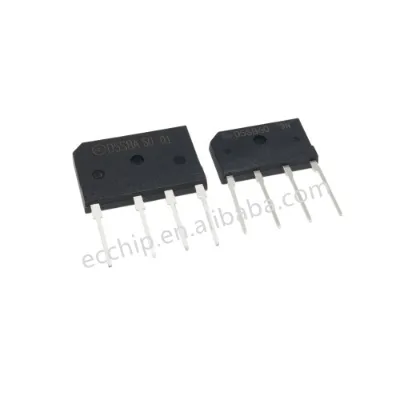
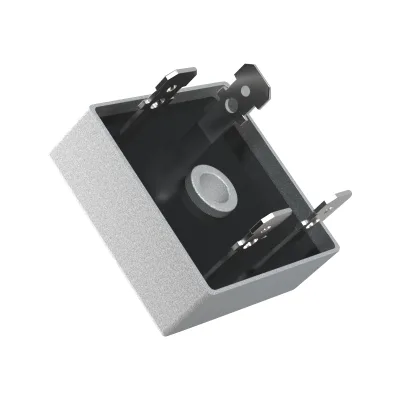
When sourcing a 75A Plastic Sealed Rectifier Bridge, buyers must first establish a precise understanding of the component's technical architecture. The core of this component lies in its ability to convert alternating current (AC) to direct current (DC) while maintaining structural integrity under thermal stress. The "plastic sealed" designation indicates an encapsulation structure designed to protect the internal semiconductor elements from environmental contaminants, moisture, and mechanical shock. This is distinct from older metal-can or epoxy-coated variants, offering superior durability for industrial applications.
The current rating of 75A represents the continuous forward current the device can handle. However, procurement documents often list variations in current ratings, such as 40A or 1600V reverse voltage, which suggests that a 75A unit may be part of a broader family of power modules. Buyers should verify the specific forward current and reverse repeat peak voltage (VRRM) for their specific application. In the observed market data, reverse voltage ratings of 1600V are common for similar plastic-sealed transistors, indicating a high-voltage tolerance suitable for industrial power supplies. The phase configuration is critical; while some rectifier bridges are single-phase, others are designed for three-phase systems. The target keyword implies a bridge configuration, but the specific phase count must be confirmed against the application's power source.
Thermal management is another pivotal specification. The cooling method for these components often involves natural cooling, heatsink cooling, or fan cooling, depending on the enclosure and duty cycle. The operating temperature range is a strict constraint; data indicates a range of -40°C to +65°C, with some sources extending to +70°C. Exceeding these limits can lead to premature failure. Additionally, the control method, often described as "ordinary thyristor" or standard diode action, dictates the switching characteristics. For high-power applications, the excitation current and load capacity are significant factors. High excitation current and strong load capacity are features that ensure stability under fluctuating electrical loads, a necessity for emergency crew units or standby generators.
Compliance, Certification, and Regulatory Standards
Navigating the compliance landscape is essential for international procurement. The rectifier bridge must meet specific regional and international standards to be legally sold and safely integrated into end products. In the observed market, certifications such as CE, CCC, ISO, and RoHS are frequently cited. The CE mark indicates conformity with health, safety, and environmental protection standards for products sold within the European Economic Area. The CCC (China Compulsory Certification) is mandatory for products sold within China, while ISO standards generally refer to quality management systems rather than the product itself, though they reflect the manufacturer's operational maturity.
RoHS (Restriction of Hazardous Substances) compliance is a critical environmental standard, ensuring the component is free from specific hazardous materials like lead, mercury, and cadmium. While RoHS is listed as a background fact in some contexts, buyers should treat it as a primary verification point. The product standard dimensions also play a role in compliance and fitment. Observed standard sizes include 976053mm, 942533mm, and 1428540mm. These physical dimensions must align with the PCB layout or chassis design of the final assembly. A mismatch in standard dimensions can render a compliant component unusable.
Furthermore, the origin of the product influences regulatory requirements. Most observed units originate from China, specifically Guangdong province. Sourcing from this region requires careful attention to export regulations and the authenticity of the provided certifications. Buyers should request valid certification documents directly from the supplier rather than relying on marketing claims. The "product completion type" is often listed as "Standard," which implies the component meets baseline industry specifications without custom modifications. However, for specialized applications, verifying that the standard certification covers the specific voltage and current rating is necessary.
Cost Drivers and Pricing Dynamics
The pricing of 75A plastic sealed rectifier bridges is influenced by a complex interplay of factors, including raw material costs, manufacturing complexity, and order volume. The observed price range in the market is vast, spanning from $0.01 to $4390. This extreme variance suggests that the market includes both low-cost discrete components and high-value integrated generator sets or complete modules. For a single 75A rectifier bridge, the price is likely at the lower end of this spectrum, but buyers must be wary of listings that bundle the component with expensive accessories or larger assemblies.
Minimum Order Quantity (MOQ) is a significant cost driver. The observed MOQ range is 1 to 10,000 units. For small-scale prototyping or maintenance, an MOQ of 1 piece is highly advantageous, allowing buyers to test components without significant capital outlay. However, larger production runs often benefit from economies of scale, potentially lowering the unit cost. The payment terms also affect the effective cost. Common methods include PayPal, TT (Telegraphic Transfer), Western Union, and Trade Assurance. Trade Assurance offers a layer of financial protection, which can be valuable for first-time buyers or large orders.
The "Medium Power" classification and the claim of "100% Brand New" status are also cost indicators. Genuine, brand-new components from reputable manufacturers command a premium over refurbished or generic alternatives. The packaging method, whether in a box, carton box, or on a pallet, can add to the logistical cost. For instance, a standard box (20 × 18 × 7cm) is suitable for individual shipping, while palletized shipping is more cost-effective for bulk orders. Buyers should calculate the total landed cost, including shipping and duties, rather than focusing solely on the unit price.
Typical Applications and Operational Environments
The versatility of the 75A Plastic Sealed Rectifier Bridge makes it suitable for a wide array of industrial and commercial applications. The "Conditions of Use" data highlights Land Use, Marine, and Trailer Type environments. This suggests the component is robust enough to withstand vibration, humidity, and temperature fluctuations associated with mobile and outdoor applications. In marine environments, the plastic sealing is particularly valuable for resisting saltwater corrosion.
Specific usage scenarios include Common Units, Standby Units, and Emergency Crew systems. In standby and emergency power systems, reliability is paramount. The rectifier bridge must function flawlessly during power outages, converting AC from a generator to DC for battery charging or control circuits. The "Diesel Generator" type and "Large and Medium-Sized Brushless Generator Sets" mentioned in the context indicate that these components are integral to the power generation ecosystem. They are likely used in the excitation systems or rectification stages of these generators.
The frequency range of 50-60 Hz and output voltage of 24V or 100-130 V AC / 170-264 V AC suggest compatibility with standard global power grids. The component's ability to handle three-phase output (AC Three Phase) makes it ideal for heavy industrial machinery, welding equipment, and large-scale power distribution systems. The "Fixed" installation method implies that once installed, the component is not intended for frequent removal, reinforcing the need for high reliability and durability.
Supplier Evaluation and Verification Strategies
Selecting the right supplier is as critical as selecting the right component. Buyers should prioritize suppliers who offer ODM/OEM services, as this indicates flexibility in customization and manufacturing capability. The "Original" brand name is a key indicator of authenticity, distinguishing genuine components from counterfeit or re-marked parts. When evaluating a supplier, verify their place of origin, such as Guangdong, China, and ensure they have a track record of exporting to your region.
The "Customization" availability is a significant differentiator. If your application requires non-standard dimensions or specific electrical characteristics, a supplier offering customization can provide a tailored solution. However, buyers must balance this with the risk of longer lead times and higher costs. The "Shutdown Speed" being "Normal" suggests standard performance, but for critical applications, buyers should inquire about response times and failure modes.
Payment security is another evaluation criterion. Suppliers offering Trade Assurance provide a safety net against non-delivery or quality issues. Buyers should also check the "Product Completion Type" and ensure it matches their requirements. A "Standard" completion type is suitable for general use, but custom requirements may need a different designation. Finally, verify the "Product Type" and "Model Number" against the datasheet. For example, models like D5SBA60, MTC70A1600V, or QL40 1600V represent specific configurations that must match the 75A requirement.
Quality Control and Long-Term Procurement Considerations
Implementing a robust quality control (QC) process is essential to mitigate the risks of component failure. Given the wide range of observed specifications, buyers should conduct incoming inspection tests to verify the current rating, reverse voltage, and physical dimensions. The "Encapsulation Structure" should be inspected for defects, such as cracks or voids, which could compromise the seal. Thermal testing is also crucial; the component should be subjected to the maximum operating temperature to ensure it does not exceed the -40°C to +65°C (or +70°C) range under load.
Long-term procurement considerations involve building a sustainable supply chain. Relying on a single supplier can be risky; diversifying the supplier base ensures continuity of supply. Buyers should also consider the "Lead Time" and "MOQ" for future orders. If the MOQ is high, buyers may need to coordinate with other departments to consolidate orders. The "Packaging" method should be evaluated for long-term storage; carton boxes and pallets offer good protection, but proper warehouse conditions are necessary to prevent moisture damage.
Finally, buyers should monitor the "Certification" status of their suppliers over time. Certifications like CE and ISO may expire or require renewal. Regular audits or requests for updated documentation can ensure ongoing compliance. By focusing on these quality and supply chain factors, buyers can secure a reliable source for 75A plastic sealed rectifier bridges that meets both technical and operational demands.
Comparative Analysis of Component Specifications
To aid in decision-making, the following table summarizes key specifications observed in the market for similar plastic sealed rectifier bridges. This comparison helps buyers identify the specific attributes that align with their 75A requirements.
| Attribute | Observation A | Observation B | Observation C |
|---|---|---|---|
| Model Number | MDS500A1600V | QL40 1600V | MTC70A1600V |
| Reverse Voltage | 1600V | 1600V | 1600V |
| Current Rating | 40A (Observed) | 75A (Target) | 70A (Observed) |
| Dimensions | 1428540mm | 976053mm | 942533mm |
| Cooling Method | Natural/Heatsink | Fan Cooling | Natural Cooling |
| Phase | Three-Phase | Three-Phase | Single/Three-Phase |
| Certification | CE, CCC, ISO | CE | CE, RoHS |
| Origin | Guangdong, China | Guangdong, China | Guangdong, China |
| Packing | Carton/Pallet | Box | Box |
This table highlights that while the reverse voltage is consistent at 1600V across several models, the current ratings and dimensions vary significantly. Buyers must ensure the selected model matches the 75A requirement specifically, as some listed models are rated for 40A or 70A. The physical dimensions also differ, requiring careful PCB design or mounting bracket selection. The cooling methods vary, which impacts the thermal design of the final assembly. By cross-referencing these attributes, buyers can make informed decisions that balance performance, size, and cost.
FAQs
What certifications are available for 75a plastic sealed rectifier bridges?
Available certifications include CE, CCC, ISO, and RoHS for compliance. These marks verify adherence to safety and environmental standards for international trade. Buyers should request valid documents directly from the supplier to ensure authenticity.
Which cooling methods are used for these rectifier bridges?
The cooling methods include natural cooling, heatsink cooling, and fan cooling options. Selection depends on the specific enclosure and duty cycle of the application. Operating temperatures typically range from -40°C to +65°C or +70°C.
Can these components be customized for specific applications?
Yes, customization is available for specific product requirements. Buyers can request tailored solutions for dimensions or electrical characteristics. This option supports specialized needs but may affect lead times and costs compared to standard units.
What is the minimum order quantity for these components?
The minimum order quantity can be as low as 1 piece for prototyping. However, ranges up to 10,000 units are observed for bulk orders. Lower MOQs allow testing without significant capital outlay before committing to large production runs.
How are these rectifier bridges packaged for shipping?
Packaging options include boxes, carton boxes, and pallets depending on order size. Standard box dimensions are approximately 20 × 18 × 7cm. Palletized shipping is more cost-effective for bulk orders to ensure protection during transit.
What are the typical operating conditions for these units?
Units are designed for land use, marine, and trailer type environments. They withstand vibration, humidity, and temperature fluctuations associated with mobile applications. The plastic sealing protects internal elements from moisture and mechanical shock effectively.
Which voltage ratings are common for these plastic sealed bridges?
Common reverse repeat peak voltage ratings include 1600V for high-voltage tolerance. Output voltages can be 24V or 100-130 V AC / 170-264 V AC. These ratings ensure compatibility with various industrial power supply systems.